

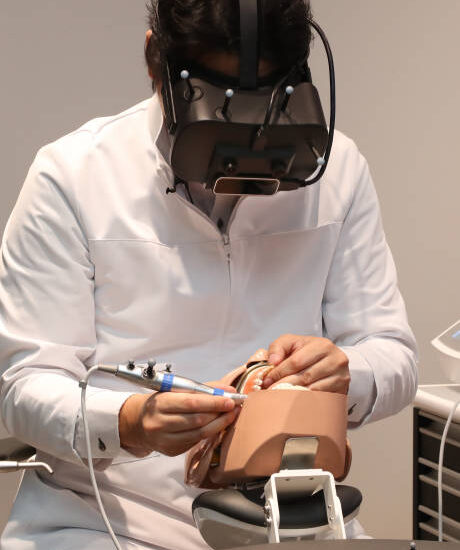
Mixed Reality in Dental Surgery: Transforming Oral Healthcare
Introduction: The Future of Dental Surgery
Dental surgery has seen tremendous advancements over the past few decades, and the integration of mixed reality (MR) technology is now revolutionizing the field. By combining virtual and augmented reality, mixed reality allows dental surgeons to visualize, plan, and execute procedures with unprecedented precision. This technology enhances surgical outcomes, reduces errors, and improves patient experiences in both routine and complex dental procedures.
What is Mixed Reality in Dentistry?
Mixed reality merges real-world environments with computer-generated digital overlays. In dental surgery, MR can project 3D models of a patient’s teeth, jawbone, and surrounding tissues directly into the surgeon’s field of view. This allows the dental team to examine detailed anatomy in real time, plan procedures virtually, and perform minimally invasive surgery with greater accuracy. Unlike traditional imaging methods, MR provides an interactive, immersive experience that enhances decision-making during surgery.
Applications of Mixed Reality in Dental Surgery
Mixed reality is increasingly used in various dental procedures, including:
- Implant placement: MR helps surgeons visualize the exact position and angle for dental implants, reducing risks to nerves and sinuses.
- Orthognathic surgery: Complex jaw surgeries benefit from 3D planning and virtual simulations before operating on the patient.
- Endodontic procedures: MR assists in navigating intricate root canals with precise guidance.
- Education and training: Dental students and residents can practice surgeries in a virtual environment, improving skills without patient risk.
Advantages for Patients and Surgeons
The benefits of MR in dental surgery are significant:
- Enhanced precision: Surgeons can plan and execute procedures more accurately.
- Reduced surgical time: Real-time visualization minimizes guesswork and procedural delays.
- Minimized complications: Better planning reduces the risk of errors, leading to safer outcomes.
- Improved patient communication: Patients can view 3D models of their procedures, understanding what to expect and making informed decisions.
Challenges and Future Potential
While MR technology offers transformative potential, it comes with challenges. High costs, equipment training, and integration into existing dental workflows require careful management. However, as technology evolves and becomes more accessible, mixed reality is expected to become a standard tool in dental surgery, offering safer, more precise, and patient-friendly procedures.
Conclusion: A New Era in Dentistry
Mixed reality is ushering in a new era of dental surgery, blending digital innovation with traditional surgical expertise. By providing immersive dr robert daniels visualization, precise planning, and improved patient communication, MR is reshaping the way dental professionals approach complex procedures. As adoption grows, mixed reality promises to enhance surgical outcomes, streamline workflows, and ultimately transform the future of oral healthcare.